
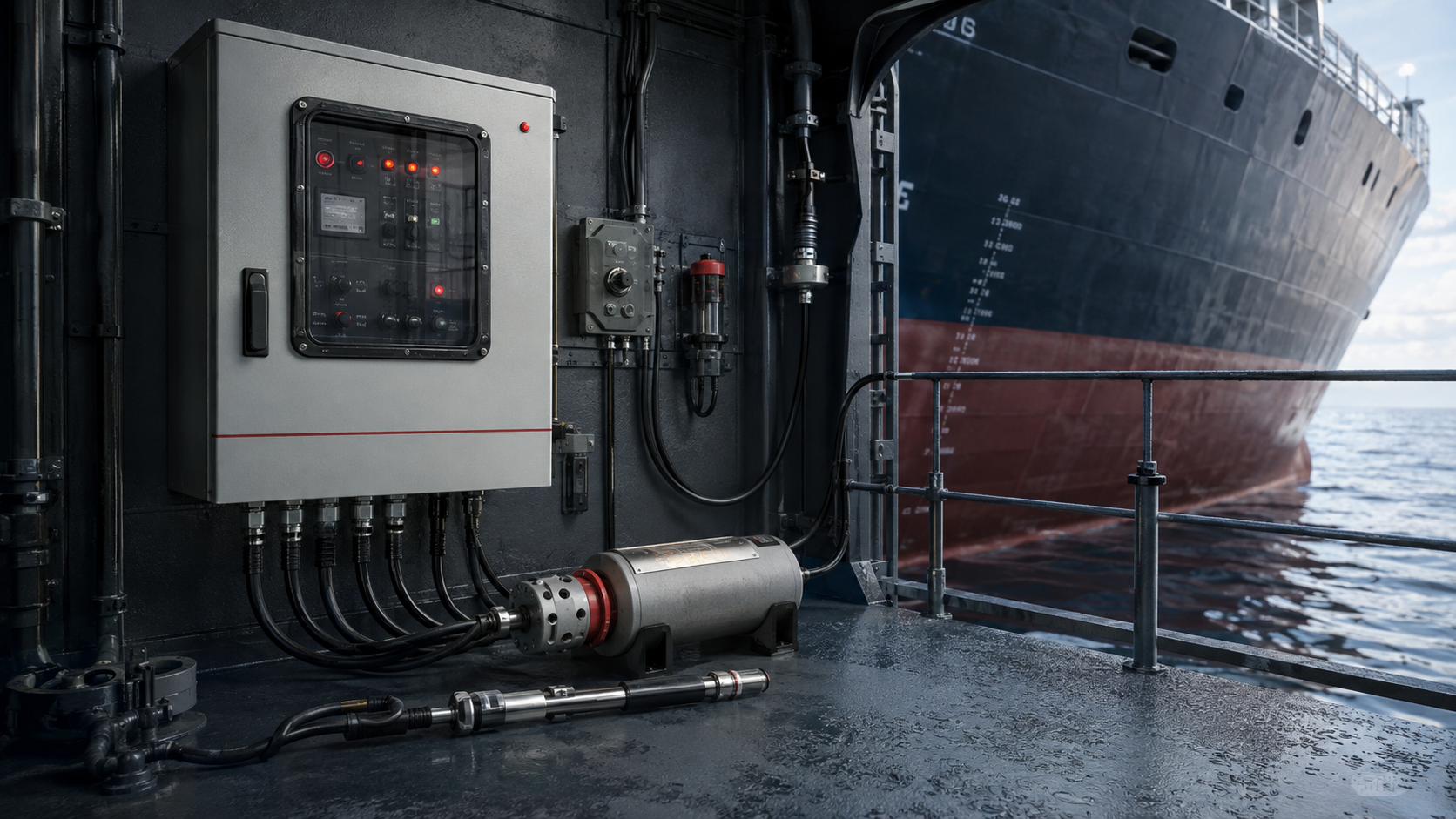
Impressed Current Cathodic Protection (ICCP) Systems
Automatically controlled impressed current hull protection using inert anodes and reference electrodes, for commercial vessels and offshore structures.
Hull Protection Demand Changes Faster Than A Fixed System Can Follow
Speed, salinity, temperature and coating condition all move the current the hull needs. A fixed output either underprotects the steel or overprotects the coating.
Automatic Control That Follows The Hull, Docking To Docking
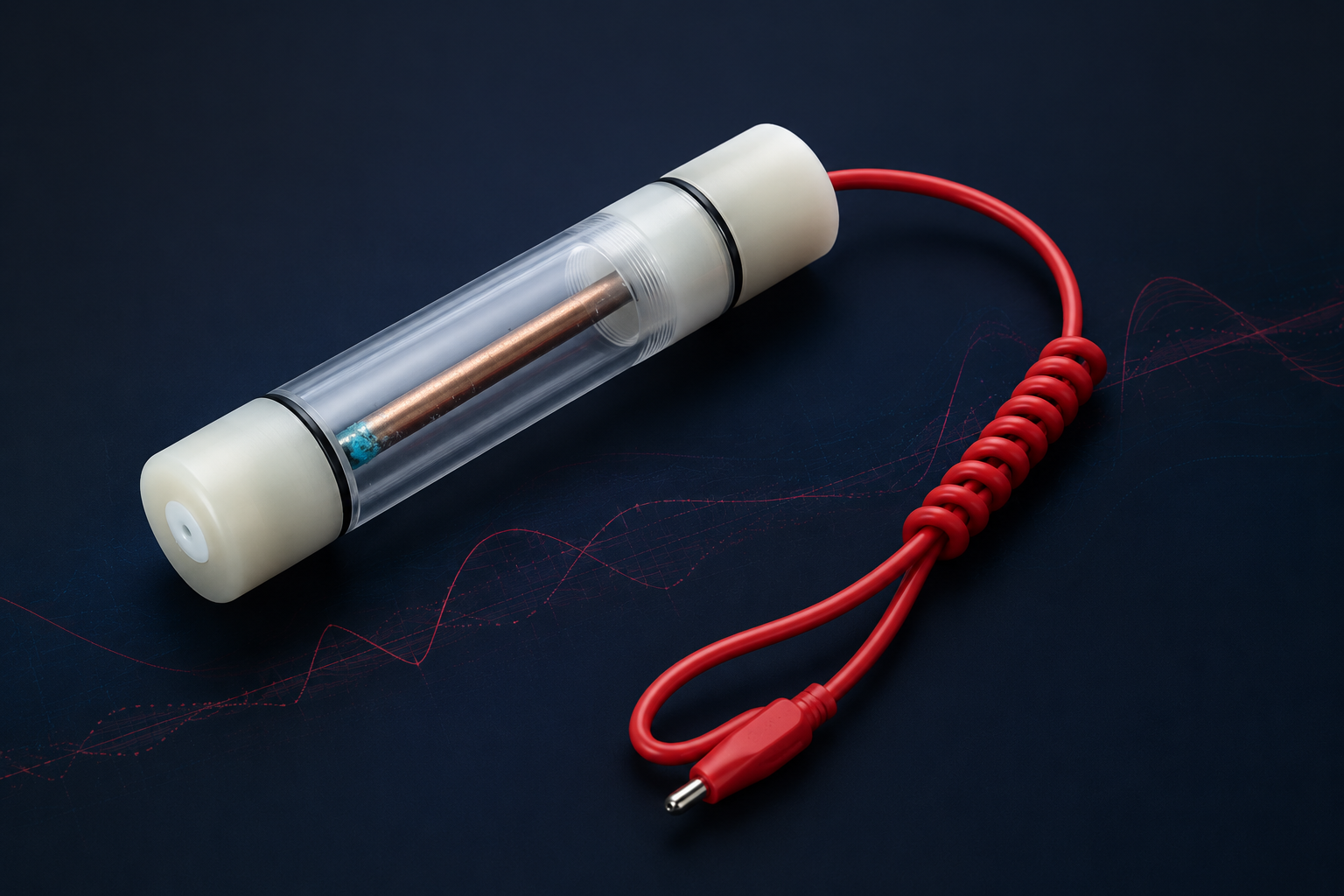
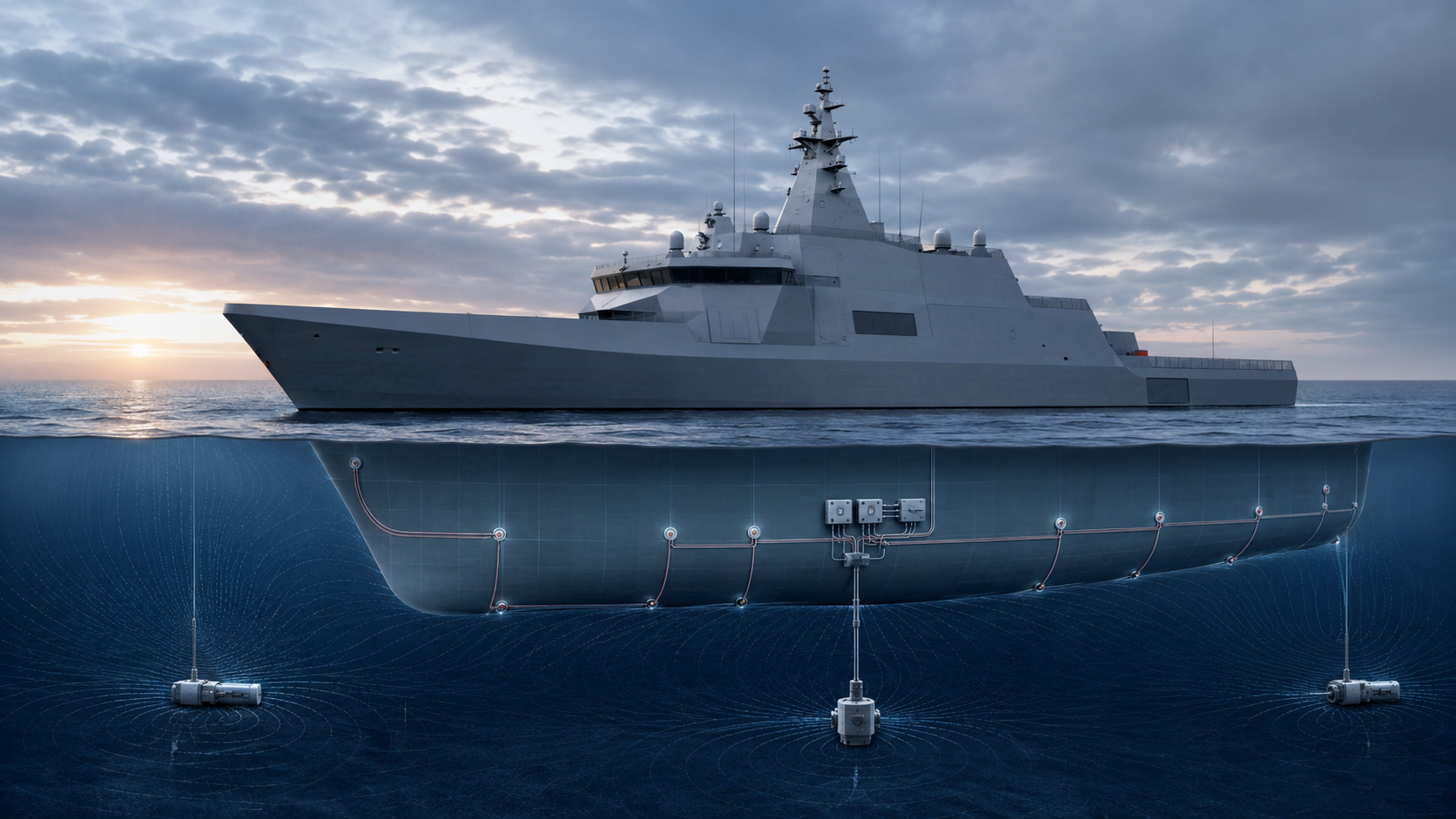
Reference electrodes measure hull potential continuously and the controller regulates anode current to the set point, using inert anodes whose output is set by the controller rather than by consumption.
Measured Potential In, Controlled Current Out
- Reference electrode signal
- Controlled anode current
Three Steps, Continuously
- 01
Reference electrodes measure the hull-to-seawater potential in each protected zone.
- 02
The controller compares measured potential with the set point.
- 03
Low-voltage DC output is regulated and distributed to the anodes.
Engineered Current Distribution, Not A Bulk Output
- Automatic potential control against the specified set point
- Single-zone or multi-zone current distribution
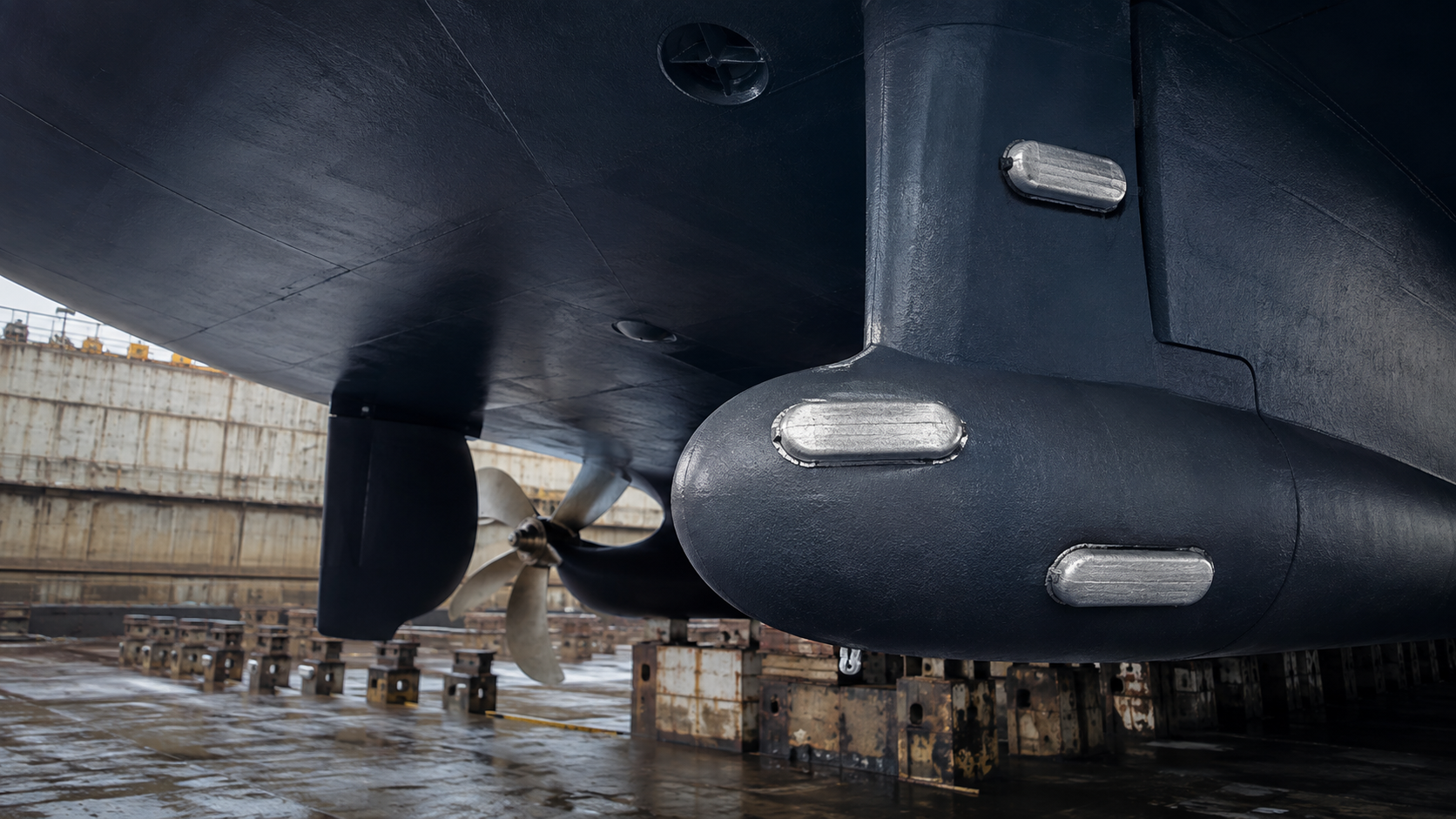
- Inert anodes with no consumable output element
Fitted On Commercial Vessels, FPSOs, Offshore Units And Floating Docks.
- Commercial steel-hulled vessels
- Aluminium-hulled vessels, with control settings appropriate to the hull material
- FPSOs and offshore floating units
- Floating docks and harbour craft
Size An ICCP System For Your Vessel
Share the shell expansion, wetted areas, coating system and operating profile, and we will prepare the current distribution study and a technical proposal.